
Understanding and managing call center cost represents one of the most critical financial challenges facing businesses today. Whether you operate an in-house contact center or partner with an outsourcing provider, the expenses associated with customer service operations can significantly impact your bottom line. The complexity of cost structures, ranging from personnel salaries to technology investments and facility overhead, requires careful analysis and strategic planning. As customer expectations continue to rise and competition intensifies across industries, organizations must balance quality service delivery with sustainable operational expenses.
Breaking Down Call Center Cost Components
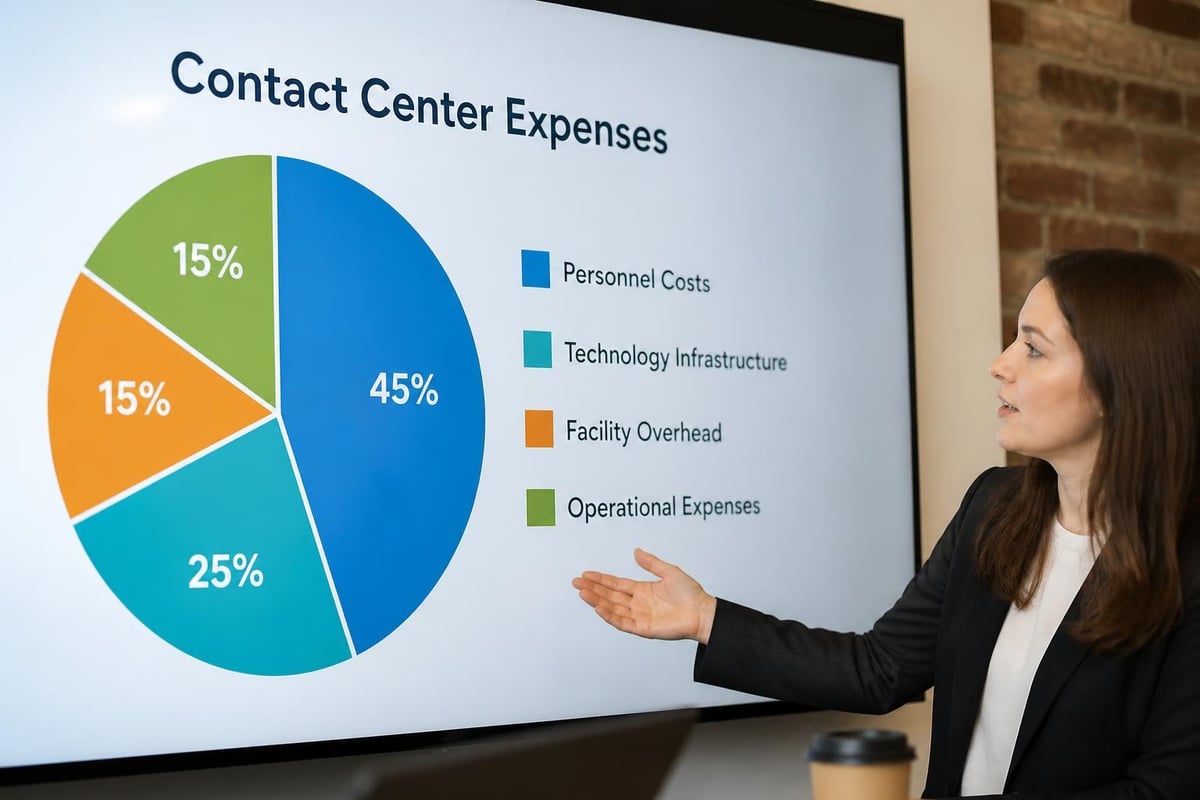
The total cost of running a contact center extends far beyond agent salaries. A comprehensive understanding of all expense categories enables better budgeting and identifies opportunities for optimization.
Personnel expenses typically represent the largest portion of call center cost, accounting for 60-70% of total operating budgets. This category includes:
- Base wages and overtime compensation
- Payroll taxes and benefits packages
- Recruitment and onboarding expenses
- Training and development programs
- Team leader and supervisor salaries
- Quality assurance and workforce management staff
Technology and infrastructure form the second major expense category. Modern contact centers require substantial investments in hardware, software, and connectivity to deliver seamless customer experiences.
| Technology Category | Cost Drivers | Budget Impact |
|---|---|---|
| Telephony Systems | VoIP licenses, PBX maintenance, carrier fees | 10-15% of total budget |
| CRM & Ticketing | Per-seat licenses, customization, integrations | 8-12% of total budget |
| Workforce Management | Scheduling software, forecasting tools, analytics | 3-5% of total budget |
| Quality Monitoring | Call recording, speech analytics, evaluation platforms | 2-4% of total budget |
Facility and overhead costs complete the picture, encompassing real estate expenses, utilities, insurance, and administrative support. Organizations operating their own centers must account for rent or mortgage payments, maintenance, security, and the physical workspace required for each agent position.
Calculating Cost Per Contact Accurately
Measuring cost per contact provides essential insight into operational efficiency and enables meaningful benchmarking against industry standards. This metric reveals the true expense of each customer interaction across different channels.
Understanding the Cost Per Contact Formula
The basic calculation divides total operating expenses by the number of customer interactions handled during a specific period. However, sophisticated organizations segment this metric by channel, time period, and interaction type for deeper insights.
Total Operating Costs ÷ Total Number of Contacts = Cost Per Contact
For a more granular approach, organizations should calculate channel-specific costs since phone interactions typically cost significantly more than email or chat:
- Phone contacts: $5-12 per interaction
- Email support: $2-4 per interaction
- Live chat: $1-3 per interaction
- Self-service: $0.10-0.50 per interaction
The Klipfolio guide to Cost Per Contact offers practical formulas and worked examples that demonstrate how to isolate variable costs from fixed overhead. This distinction becomes crucial when evaluating the financial impact of volume changes or channel shift strategies.
Benchmarking Your Performance
Industry benchmarks provide context for your cost performance. According to Deloitte Digital's contact-center research, leading organizations continuously monitor cost per interaction alongside quality metrics to identify optimization opportunities without compromising customer satisfaction.
Organizations should compare their metrics against:
- Industry peers with similar service complexity and customer demographics
- Historical performance to track improvement over time
- Best-in-class performers to understand the ceiling for operational excellence
- Channel benchmarks to guide investment in lower-cost interaction methods
In-House Versus Outsourced Call Center Cost Models
The decision between operating an internal contact center and partnering with an outsourcing provider fundamentally alters your cost structure and financial risk profile. Each model presents distinct advantages and trade-offs that organizations must evaluate based on their specific circumstances.
In-House Operations: Full Control, Higher Fixed Costs
Building and maintaining an internal contact center requires substantial upfront capital investment and ongoing operational commitments. Organizations must invest in facility buildout, technology infrastructure, and recruitment before handling the first customer interaction.
Fixed cost commitments include:
- Real estate and facility development
- Enterprise-grade technology platforms
- IT support and maintenance teams
- HR and administrative infrastructure
- Management and leadership positions
The TechTarget comparison of on-premises versus cloud contact centers highlights how deployment models significantly impact total cost of ownership. Organizations choosing on-premises solutions face higher capital expenditures but gain complete control over data, customization, and integration with internal systems.
Variable costs remain substantial as well, with seasonal fluctuations requiring careful workforce planning to avoid expensive overtime or unnecessary idle capacity.
Outsourcing: Variable Costs and Scalability
Outsourced contact centers transform fixed expenses into variable costs aligned with actual contact volume. This model eliminates capital requirements and transfers operational risk to the service provider.
Modern call center services offer flexible pricing structures that adapt to business cycles, seasonal peaks, and growth trajectories. Organizations pay for productive agent hours rather than maintaining full-time staff during low-volume periods.

| Cost Factor | In-House Model | Outsourced Model |
|---|---|---|
| Initial Investment | $500K - $2M+ | Minimal to none |
| Per-Agent Monthly Cost | $3,500 - $5,500 | $2,200 - $4,000 |
| Scalability Timeline | 3-6 months | 1-4 weeks |
| Technology Upgrades | Full responsibility | Included in service |
| Management Overhead | Direct hiring required | Provided by partner |
Nearshore outsourcing to locations like Romania offers particular cost advantages while maintaining cultural alignment and language capabilities for European markets. Organizations exploring nearshore call center solutions find that strategic geographic selection delivers cost optimization without the quality compromises sometimes associated with offshore alternatives.
Technology Investments That Reduce Long-Term Costs
Strategic technology investments create sustainable call center cost reductions while simultaneously improving service quality and agent satisfaction. The key lies in identifying solutions that deliver measurable ROI through efficiency gains and automation.
Artificial Intelligence and Automation
AI-powered solutions fundamentally reshape contact center economics by handling routine inquiries without human intervention. The Accenture report on Intelligent Service Centers demonstrates how organizations leverage generative AI and automation to reduce cost per interaction by 25-40% while maintaining or improving customer satisfaction scores.
AI applications driving cost reduction:
- Conversational AI agents handling tier-1 inquiries
- Intelligent routing reducing average handle time
- Sentiment analysis improving first-contact resolution
- Predictive analytics optimizing workforce schedules
- Automated quality monitoring reducing manual evaluation costs
Modern platforms that integrate AI capabilities natively, rather than requiring complex custom development, accelerate time-to-value and reduce implementation costs. Organizations utilizing integrated platforms with built-in AI tools avoid expensive professional services engagements and lengthy deployment cycles.
Omnichannel Platforms
Consolidating customer interactions across channels onto unified platforms eliminates redundant technology costs and improves agent productivity. Rather than maintaining separate systems for phone, email, chat, and social media, omnichannel solutions provide a single agent interface with complete interaction history.
The cost benefits extend beyond license consolidation:
- Reduced training time as agents learn one interface instead of multiple systems
- Improved first-contact resolution through complete customer context
- Lower technology support costs with fewer platforms to maintain
- Enhanced agent productivity through streamlined workflows
- Better capacity utilization with flexible agent assignment across channels
According to AI in the Contact Center research, organizations implementing AI-enhanced omnichannel platforms report average cost-per-interaction reductions of 30% within the first year while simultaneously improving Net Promoter Scores.
Cloud-Based Infrastructure
Migrating from on-premises infrastructure to cloud-based solutions transforms capital expenditures into predictable operational expenses while enabling rapid scaling without upfront investment. Cloud platforms eliminate hardware refresh cycles, reduce IT support requirements, and provide automatic updates that maintain security and feature currency.
The financial advantages include:
- No hardware purchases or data center requirements
- Predictable monthly pricing based on actual usage
- Elimination of version upgrade projects through continuous updates
- Reduced IT staffing requirements for platform maintenance
- Geographic flexibility enabling distributed workforce models
Optimizing Agent Productivity and Efficiency
Agent productivity directly impacts call center cost efficiency. Organizations that improve output per agent effectively reduce the headcount required to handle a given volume, creating sustainable cost reductions without service degradation.
Workforce Management Excellence
Sophisticated workforce management practices align staffing levels with predicted demand patterns, minimizing expensive overtime while maintaining service levels. Advanced forecasting incorporates multiple variables including historical patterns, seasonal trends, marketing campaign schedules, and external factors affecting contact volume.
Key workforce management practices:
- Multi-week advance scheduling improving agent work-life balance
- Real-time adherence monitoring enabling immediate adjustments
- Skills-based routing matching interactions to agent expertise
- Strategic use of part-time and flex staff for peak coverage
- Proactive schedule optimization based on actual versus forecast performance
Organizations that excel at workforce management typically operate at 85-90% occupancy rates compared to 70-75% for less sophisticated operations. This productivity difference translates directly to 15-20% headcount reduction for equivalent volume.
Training and Quality Programs
Comprehensive training programs require upfront investment but generate substantial long-term cost savings through improved first-contact resolution, reduced handle times, and lower agent turnover. New hire training that thoroughly prepares agents before taking live contacts prevents costly errors and reduces supervisor intervention requirements.
Ongoing quality programs maintain performance standards:
- Regular coaching sessions addressing individual development needs
- Side-by-side monitoring for real-time skill development
- Peer learning programs sharing best practices across the team
- Performance incentives aligned with efficiency and quality metrics
- Career pathing reducing turnover and recruitment costs
The financial impact of reducing agent attrition from industry-average 30-40% to best-in-class 15-20% ranges significantly exceeds most technology investments when considering recruitment, training, and lost productivity costs.

Location Strategy and Labor Market Selection
Geographic decisions profoundly influence call center cost structures through labor market dynamics, real estate expenses, and operational complexity. Organizations must balance cost considerations with talent availability, language capabilities, and service quality requirements.
Domestic Versus International Operations
Domestic contact centers in high-cost markets like major U.S. cities face agent wage pressures that can reach $18-25 per hour for basic customer service positions, with benefits adding another 25-35% to total compensation costs. These locations offer advantages in cultural alignment, accent neutrality, and simplified management but struggle with cost competitiveness.
International outsourcing to countries with favorable labor economics creates substantial savings but introduces challenges:
- Time zone differences complicating real-time supervision
- Cultural and language barriers affecting customer satisfaction
- Quality control requiring additional management oversight
- Employee turnover rates often exceeding domestic benchmarks
- Reputational concerns among certain customer segments
The Nearshore Advantage
European organizations increasingly recognize nearshore locations like Romania as optimal balancing points between cost efficiency and service quality. These markets provide:
- Competitive labor costs 40-60% below Western European rates
- Cultural alignment with minimal accent or communication barriers
- Matching time zones enabling synchronous management
- Multilingual talent pools supporting pan-European service delivery
- EU regulatory compliance simplifying data protection requirements
Organizations exploring inbound call center services or outbound call center services in nearshore locations discover that strategic partner selection delivers both cost optimization and operational excellence. The proximity enables regular site visits, stronger relationship development, and hands-on quality oversight that distant offshore arrangements cannot replicate.
Measuring ROI on Cost Reduction Initiatives
Call center cost optimization requires disciplined measurement to distinguish genuinely effective initiatives from changes that simply shift expenses or compromise quality. Comprehensive ROI analysis considers both direct financial impacts and indirect effects on customer satisfaction, employee engagement, and brand reputation.
Establishing Baseline Metrics
Before implementing cost reduction programs, organizations must document current performance across multiple dimensions:
- Total operating cost and cost per contact by channel
- Average handle time and first-contact resolution rates
- Customer satisfaction scores and Net Promoter Score
- Agent turnover rates and time-to-proficiency for new hires
- Technology costs per agent position
- Facility costs per agent position
These baseline measurements enable accurate assessment of post-implementation results and prevent misleading conclusions from incomplete analysis.
Tracking Multi-Dimensional Impact
Effective ROI measurement extends beyond simple cost reduction to encompass quality and customer experience impacts. Cost savings achieved through approaches that degrade service quality create long-term value destruction despite short-term financial benefits.
Balanced scorecard approach:
| Metric Category | Key Indicators | Target Direction |
|---|---|---|
| Financial | Cost per contact, total operating expense | Decrease |
| Quality | First-contact resolution, CSAT, NPS | Maintain or increase |
| Efficiency | Average handle time, contacts per agent hour | Optimized balance |
| Employee | Attrition rate, engagement scores, absenteeism | Improve |
| Customer | Retention rate, customer effort score | Improve |
Organizations should monitor these metrics monthly and conduct quarterly business reviews assessing progress against targets. Initiatives delivering cost savings while maintaining or improving quality and customer metrics represent genuine optimization. Programs reducing costs at the expense of satisfaction or employee engagement require reassessment and adjustment.
Calculating Payback Periods
Technology investments and process improvements require upfront costs that organizations must weigh against expected ongoing savings. Calculating payback periods helps prioritize initiatives and manage cash flow:
Payback Period = Initial Investment ÷ Annual Savings
For example, an omnichannel platform costing $150,000 to implement that reduces annual operating costs by $75,000 through improved efficiency delivers a two-year payback period. Organizations typically target 18-36 month paybacks for technology investments, though strategic capabilities enabling competitive differentiation may justify longer horizons.
Industry-Specific Cost Considerations
Different industries face unique cost dynamics based on interaction complexity, regulatory requirements, and customer expectations. Understanding these nuances enables more accurate budgeting and appropriate performance benchmarking.
Healthcare Contact Centers
Healthcare organizations manage particularly complex cost structures driven by HIPAA compliance requirements, clinical knowledge needs, and regulatory oversight. Healthcare contact centers require specialized training programs covering medical terminology, insurance processes, and patient privacy protocols that extend onboarding timelines and increase per-agent training costs by 30-50% compared to general customer service.
Technology requirements also expand to encompass secure data handling, integration with electronic health records, and audit trail capabilities. These specialized capabilities increase platform costs while limiting vendor selection to providers with relevant certifications and healthcare experience.
Financial Services Operations
Finance contact centers navigate strict regulatory frameworks requiring enhanced security measures, comprehensive quality monitoring, and detailed documentation of customer interactions. Compliance costs add 20-35% to baseline operating expenses through mandatory training, quality assurance programs, and technology controls.
However, financial services organizations also benefit from higher tolerance for premium pricing given the value of customer relationships and account balances. This dynamic supports investment in advanced capabilities that may not generate clear ROI in lower-margin industries.
E-commerce Support
E-commerce contact centers experience dramatic seasonal volume fluctuations requiring flexible staffing models and scalable technology infrastructure. The cost challenge centers on maintaining service quality during peak periods without sustaining unnecessary capacity year-round.
Successful e-commerce support operations leverage:
- Seasonal staffing pools activated for peak periods
- Overflow arrangements with outsourcing partners providing surge capacity
- AI-powered automation handling routine order status and tracking inquiries
- Asynchronous channels like email reducing real-time staffing requirements
- Self-service tools deflecting common questions before agent involvement
Continuous Improvement and Cost Management
Sustainable call center cost optimization requires ongoing attention rather than one-time initiatives. Leading organizations embed continuous improvement methodologies into operational management, regularly identifying and addressing efficiency opportunities before cost pressures escalate.
Monthly Performance Reviews
Structured monthly reviews examining cost trends, productivity metrics, and quality indicators enable early intervention when performance deteriorates. These sessions should analyze:
- Cost per contact trends by channel and interaction type
- Productivity changes including handle time and contacts per agent
- Quality metric movements indicating training or process needs
- Technology performance identifying system issues affecting efficiency
- Staffing efficiency revealing scheduling or forecasting opportunities
Quarterly Strategic Assessment
Beyond monthly operational reviews, quarterly strategic assessments evaluate larger initiatives and market dynamics. These sessions consider technology roadmaps, competitive positioning, customer expectation evolution, and workforce strategy.
Organizations should use quarterly reviews to:
- Assess ROI on recent technology investments or process changes
- Evaluate outsourcing partner performance against contracted commitments
- Review industry benchmarks and adjust internal targets accordingly
- Identify emerging technologies warranting pilot programs
- Analyze workforce trends and adjust compensation or benefits strategies
Annual Budget Planning
Comprehensive annual planning integrates operational experience with strategic objectives to create realistic budgets aligned with business growth plans. This process should incorporate:
- Volume forecasts based on customer growth and channel shift trends
- Technology refresh cycles and platform upgrade requirements
- Compensation adjustments reflecting market dynamics
- Training investments supporting new product launches or service expansions
- Facility or geographic expansion needs
Managing call center cost effectively requires balancing immediate financial pressures with long-term strategic objectives around customer experience and competitive positioning. Organizations that view contact centers as cost centers to minimize miss opportunities to transform customer service into a competitive differentiator. InfraWeb delivers optimized contact center economics through its Romanian operations, combining competitive nearshore pricing with advanced HELION platform capabilities that integrate AI-powered automation, omnichannel communication, and comprehensive workforce management tools designed specifically for European market requirements.