
The contact centre industry stands at a transformative crossroads in 2026, where artificial intelligence has evolved from experimental novelty to operational necessity. An ai call centre represents far more than simple automation-it embodies a fundamental reimagining of how organizations engage with customers, resolve issues, and scale support operations. Organizations that integrate AI voice agents, intelligent routing, and automated workflows now handle exponentially higher volumes while maintaining personalized service levels that were previously impossible. The technology has matured beyond basic chatbots into sophisticated systems capable of understanding context, managing complex dialogues, and seamlessly collaborating with human agents to deliver exceptional customer experiences.
Understanding the AI Call Centre Architecture
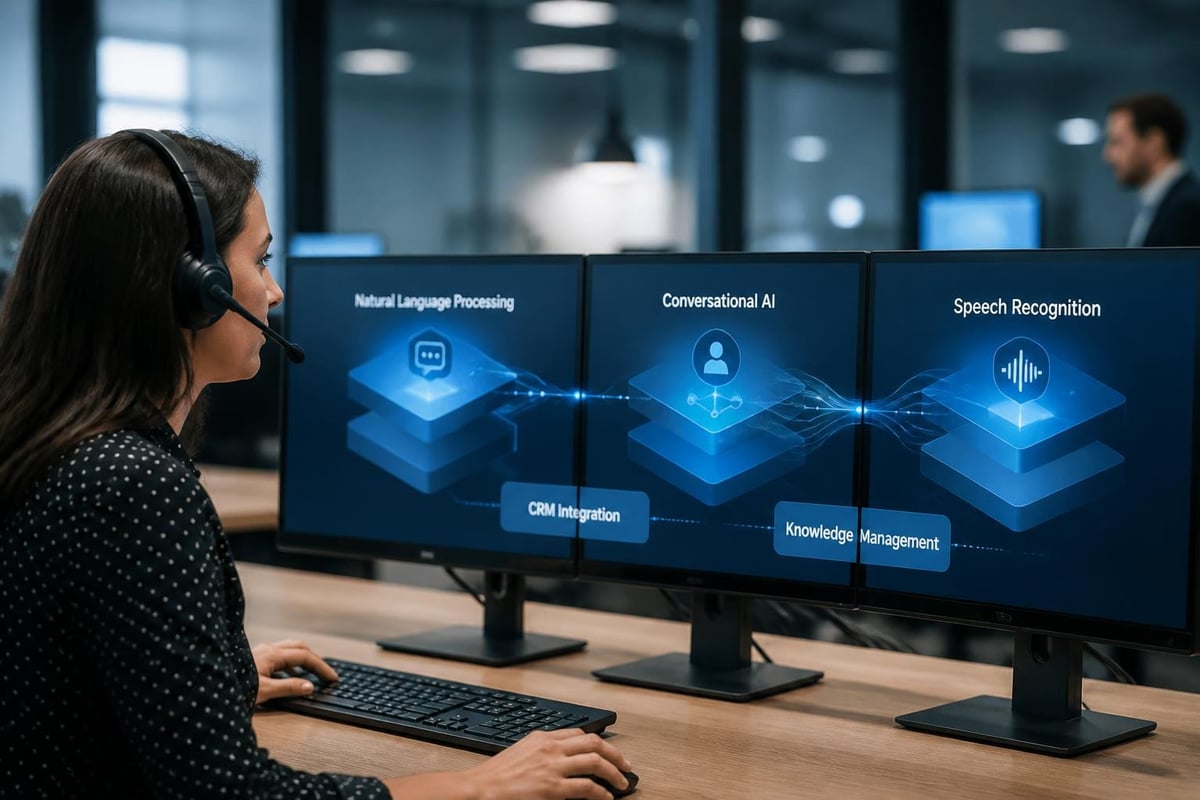
Modern ai call centre infrastructure combines multiple technological layers that work in concert to process customer interactions. The foundation begins with natural language processing engines that interpret spoken and written queries, converting customer intent into actionable data points. These systems analyze tone, sentiment, and linguistic patterns to understand not just what customers say, but what they truly need.
Core Components of AI-Driven Contact Centers
The essential building blocks of an effective ai call centre system include several integrated technologies:
- Conversational AI engines that manage multi-turn dialogues and maintain context across exchanges
- Speech synthesis and recognition systems capable of understanding regional accents and dialects
- Intent classification algorithms that route inquiries to appropriate resources
- Knowledge management platforms that deliver accurate information in real-time
- Integration middleware connecting AI systems with CRM, ticketing, and business applications
Voice AI capabilities have progressed dramatically, with systems now handling Romanian, English, and multiple other languages with near-native fluency. The technology recognizes nuanced requests and adapts responses based on customer profiles, interaction history, and real-time sentiment analysis.
Integration with Existing Infrastructure
Successful ai call centre deployment requires thoughtful integration with legacy systems rather than wholesale replacement. Organizations must connect AI components with existing telephony infrastructure, customer databases, and business intelligence tools. This integration challenge explains why platform-based approaches that unify multiple channels and data sources have become increasingly valuable.
Modern platforms enable seamless handoffs between AI agents and human specialists, preserving conversation context and customer data throughout the transition. When AI encounters scenarios beyond its training parameters, intelligent escalation protocols ensure smooth transfers to appropriate human agents without forcing customers to repeat information.
Practical Applications Across Contact Center Operations
The versatility of ai call centre technology manifests across diverse operational scenarios, each delivering measurable business value. Gartner research on customer service AI identifies several high-impact use cases that organizations are prioritizing in 2026.
Inbound Support Transformation
AI voice agents now handle substantial portions of inbound inquiry volume, addressing routine questions about account status, product information, order tracking, and basic troubleshooting. These systems operate continuously, eliminating wait times during peak periods and providing immediate assistance regardless of when customers reach out.
For inbound call center services, AI augmentation allows human agents to focus on complex cases requiring empathy, negotiation, or creative problem-solving. The technology handles high-frequency, low-complexity interactions while escalating nuanced situations appropriately.
| Use Case | AI Capability | Business Impact |
|---|---|---|
| Account inquiries | Automated verification and information retrieval | 70-80% containment rate |
| Password resets | Secure identity verification and system updates | 95% automation success |
| Order tracking | Real-time status updates and delivery information | Reduced call volume by 60% |
| Product specifications | Detailed feature and compatibility information | Improved first-call resolution |
Outbound Campaign Enhancement
Outbound operations benefit substantially from AI-powered predictive dialing, lead scoring, and conversation optimization. Modern systems analyze customer data to determine optimal contact times, personalize opening statements, and adjust conversation flow based on prospect responses.
The ai call centre approach to outbound campaigns includes intelligent abandonment rate management, ensuring compliance with regulatory requirements while maximizing agent productivity. AI systems pre-qualify leads before human connection, routing only high-potential conversations to live agents.
- Lead prioritization algorithms analyze demographic, behavioral, and firmographic data to rank prospects
- Conversation scripting engines generate personalized opening statements based on customer profiles
- Sentiment detection systems alert supervisors when conversations require intervention
- Automated follow-up scheduling creates callbacks and email sequences based on conversation outcomes
- Performance analytics dashboards identify successful patterns for continuous optimization
Technical Support and Helpdesk Operations
Technical assistance represents one of the most compelling ai call centre applications. AI agents guide customers through structured troubleshooting processes, accessing knowledge bases and diagnostic tools to resolve common technical issues without human intervention.
For help desk outsourcing scenarios, AI systems handle password resets, connectivity problems, software configuration, and basic hardware diagnostics. The technology documents each interaction, creating valuable data for product improvement teams and knowledge base enhancement.

Implementation Strategy and Change Management
Deploying an effective ai call centre requires systematic planning that addresses technology, processes, and people dimensions simultaneously. IDC guidance on driving generative AI success emphasizes the importance of aligning AI initiatives with customer journey maps and organizational capabilities.
Phased Deployment Approach
Organizations achieve optimal results through gradual implementation that builds competency and confidence:
Phase 1: Pilot and Proof of Concept Select a contained use case with measurable success metrics. Common starting points include after-hours support, basic FAQ handling, or tier-one password assistance. This phase validates technology selection and establishes baseline performance data.
Phase 2: Expansion to Core Operations Broaden AI coverage to additional interaction types while maintaining human oversight. Implement quality monitoring frameworks and continuous learning mechanisms that improve AI performance based on real-world outcomes.
Phase 3: Advanced Capabilities and Optimization Introduce sophisticated features like predictive routing, proactive outreach, and cross-channel orchestration. Optimize AI-human collaboration models based on accumulated performance data.
Training and Skills Development
Human agents require new competencies as ai call centre systems reshape their roles. Training programs should emphasize:
- Oversight of AI interactions and intervention protocols
- Handling complex cases that AI escalates
- Coaching AI systems through feedback mechanisms
- Interpreting AI-generated insights and recommendations
- Managing customer expectations around AI capabilities
This skills evolution transforms agents from transaction processors into specialists who handle exceptional cases and provide strategic value that technology cannot replicate.
Compliance, Trust, and Regulatory Considerations
The ai call centre landscape in 2026 operates within increasingly sophisticated regulatory frameworks designed to protect consumers and ensure responsible AI deployment. Organizations must navigate compliance requirements while building customer trust in automated interactions.
European AI Act Implications
The EU AI Act establishes clear obligations for organizations deploying AI in customer-facing roles. European Commission guidelines define what constitutes an AI system and specify transparency, documentation, and risk management requirements.
For nearshore call center operations serving European markets, compliance includes:
- Transparent disclosure when customers interact with AI systems
- Human oversight mechanisms for high-risk decisions
- Data protection measures aligned with GDPR requirements
- Regular bias testing and fairness assessments
- Documentation of AI training data and model performance
Building Trustworthy AI Systems
Beyond regulatory compliance, organizations must prioritize technical reliability and ethical considerations. The NIST Trustworthy and Responsible AI framework provides comprehensive guidance for building systems that are valid, reliable, safe, secure, resilient, accountable, explainable, interpretable, privacy-enhanced, and fair.
Practical trust-building measures include transparent communication about AI capabilities and limitations, easy access to human agents when needed, and robust security protocols that protect customer data throughout AI-mediated interactions.

Measuring Performance and Return on Investment
Quantifying ai call centre value requires metrics that capture both operational efficiency and customer experience dimensions. Traditional contact center KPIs evolve when AI enters the equation, necessitating new measurement frameworks.
Operational Efficiency Metrics
| Metric | Definition | Target Range |
|---|---|---|
| AI containment rate | Percentage of interactions resolved without human intervention | 65-85% |
| Average handling time | Duration from contact initiation to resolution | 30-50% reduction |
| First-call resolution | Issues resolved in single interaction | 80-90% |
| Cost per contact | Total operational cost divided by interaction volume | 40-60% decrease |
| Agent occupancy rate | Percentage of time agents actively handle interactions | 75-85% |
Customer Experience Indicators
Beyond efficiency, successful ai call centre implementation maintains or improves customer satisfaction. Key indicators include:
- Customer satisfaction scores (CSAT) measuring satisfaction with individual interactions
- Net Promoter Score (NPS) gauging overall customer loyalty and likelihood to recommend
- Customer effort score (CES) assessing how easy customers find issue resolution
- Repeat contact rate tracking how often customers must call back about the same issue
- Channel preference shifts monitoring whether customers choose AI-assisted channels
Organizations should benchmark these metrics before AI deployment and track them continuously to identify improvement opportunities and potential issues requiring intervention.
Security Considerations and Emerging Threats
The proliferation of AI voice technology creates new security challenges alongside its operational benefits. Recent research on automated and synthetic voices reveals that synthetic voice calls have increased substantially, raising concerns about fraud, impersonation, and spam.
Authentication and Verification Protocols
Robust ai call centre security requires multi-layered authentication approaches:
- Voice biometrics that verify caller identity through vocal characteristics
- Behavioral analysis monitoring interaction patterns for anomaly detection
- Knowledge-based authentication combining AI with secure information verification
- Risk-based escalation triggering additional verification for sensitive requests
- Continuous monitoring for suspicious patterns across interaction populations
Data Protection and Privacy
AI systems process enormous volumes of sensitive customer information, making data protection paramount. Organizations must implement encryption for data in transit and at rest, access controls limiting who can view customer information, data minimization principles that collect only necessary information, retention policies that delete data when no longer needed, and audit trails documenting all access to sensitive information.
For customer service outsourcing arrangements, contractual agreements must clearly define data handling responsibilities and security standards across all parties.
Future Trajectories and Strategic Implications
The ai call centre evolution continues accelerating, with several developments poised to reshape the industry further over the next 24-36 months. Multimodal AI systems will integrate voice, text, video, and screen-sharing within unified customer experiences. Emotional intelligence capabilities will enable more sophisticated empathy and relationship-building. Predictive engagement will shift from reactive support to proactive problem prevention. Hyper-personalization will leverage comprehensive customer data for individualized interactions. And autonomous decision-making will expand AI authority for certain transaction types.
Organizations investing in ai call centre capabilities today position themselves to capitalize on these advances while competitors struggle with legacy infrastructure constraints. The question has shifted from whether to adopt AI to how quickly and comprehensively to integrate it across contact center operations. Companies operating call center services available 24x7 find that AI augmentation enables continuous operations without proportional cost increases, fundamentally changing service economics.
Strategic leaders recognize that ai call centre technology represents competitive differentiation rather than mere cost reduction. Organizations that combine intelligent automation with human expertise create service experiences that build customer loyalty, reduce churn, and generate positive word-of-mouth. The technology enables personalization at scale previously impossible, allowing companies to deliver enterprise-grade service across massive customer populations.
The ai call centre transformation reshapes customer service operations across industries, delivering measurable improvements in efficiency, consistency, and scalability. Organizations that approach AI implementation strategically-addressing technology, processes, people, and governance holistically-position themselves to thrive in an increasingly competitive service landscape. InfraWeb combines advanced AI voice agents fluent in Romanian with comprehensive contact center expertise and the proprietary HELION platform, enabling organizations to harness AI capabilities while maintaining the human touch that complex customer relationships demand. Explore how AI-augmented contact center services can transform your customer engagement today.