
Modern customer expectations demand instant, personalized responses across multiple channels, placing unprecedented pressure on contact centers to deliver flawless service experiences. Call center systems have evolved from simple phone routing platforms into comprehensive technology ecosystems that orchestrate every customer interaction, empower agents with real-time intelligence, and leverage artificial intelligence to handle routine queries. Organizations investing in the right infrastructure gain measurable advantages in customer satisfaction scores, operational efficiency, and competitive differentiation. Understanding the core components, deployment models, and strategic implementation of these systems enables business leaders to make informed technology decisions that align with long-term service objectives.
Core Components of Modern Call Center Systems
Automatic Call Distribution (ACD) forms the foundation of efficient call routing, directing incoming contacts to the most qualified available agent based on predetermined rules. Skills-based routing ensures customers reach specialists who can resolve their specific issues, while priority queuing enables organizations to fast-track high-value accounts or urgent matters.
Interactive Voice Response (IVR) systems serve as the first line of automation, allowing callers to self-serve for common requests or navigate to the appropriate department without agent intervention. Advanced IVR platforms now incorporate natural language processing, enabling conversational interfaces that understand customer intent rather than forcing rigid menu navigation.
Agent Desktop and CRM Integration
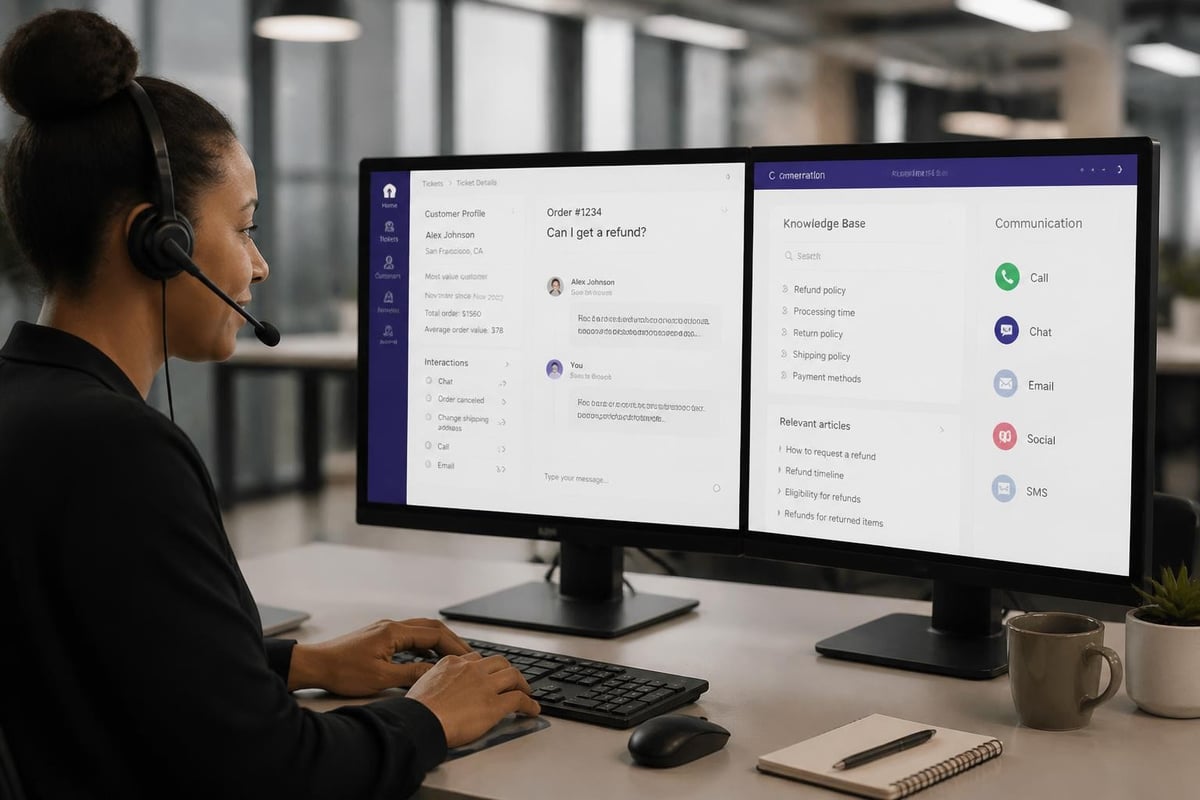
The agent workspace consolidates multiple tools into a unified interface, eliminating the need to toggle between disconnected applications. Screen pops automatically display customer history, previous interactions, and account details the moment an agent accepts a call.
Integration with Customer Relationship Management platforms creates a single source of truth for customer data. When inbound call center services connect seamlessly with CRM systems, agents access complete context before speaking, reducing handle time and improving first-call resolution rates.
| Component | Primary Function | Key Benefit |
|---|---|---|
| ACD | Intelligent call routing | Reduced wait times, improved matching |
| IVR | Self-service automation | Lower agent workload, 24/7 availability |
| Agent Desktop | Unified workspace | Faster resolution, better experience |
| CRM Integration | Centralized customer data | Personalized service, context continuity |
| Quality Management | Call monitoring and coaching | Consistent standards, skill development |
Omnichannel Architecture and Channel Integration
Contemporary call center systems extend far beyond voice communications to encompass email, chat, SMS, social media, and video interactions. True omnichannel platforms maintain conversation continuity as customers switch between channels, preserving context and history throughout the journey.
Queue management across channels ensures fair distribution of workload regardless of communication medium. An agent finishing a phone call might next receive a chat inquiry or respond to a social media mention, based on real-time availability and skills rather than channel silos.
The Forrester Tech Tide: Contact Centers for Customer Service analysis highlights the growing importance of conversational AI and workforce engagement tools in modern contact center architectures.
Digital Channel Considerations
Email ticketing systems track inquiries from first contact through resolution, applying service level agreements and escalation rules automatically. Integration with knowledge bases enables agents to insert standardized responses while maintaining personalization.
Chat and messaging platforms benefit from features like typing indicators, file sharing, and co-browsing capabilities that enable visual guidance. Asynchronous messaging allows customers to continue conversations across multiple sessions without repeating information.
- Social media monitoring captures brand mentions and routes public complaints to specialized teams
- Video support enables visual troubleshooting for technical products requiring demonstration
- SMS notifications provide proactive updates on service requests or appointment confirmings
- Mobile app integration creates native in-app support experiences
Cloud-Based vs. On-Premises Deployment Models
Organizations face critical infrastructure decisions when selecting call center systems, balancing control, cost, and scalability across deployment options. Cloud-based Contact Center as a Service (CCaaS) platforms eliminate capital expenditures, provide automatic updates, and enable rapid scaling during demand fluctuations.
On-premises installations offer maximum control over security, customization, and data sovereignty. Highly regulated industries often prefer on-site deployments to maintain strict compliance protocols and ensure sensitive customer information never leaves their network perimeter.
Hybrid models combine elements of both approaches, keeping core voice infrastructure on-premises while leveraging cloud services for analytics, workforce management, or overflow capacity. This architecture provides flexibility while maintaining critical system control.
According to industry statistics on call center services, cloud adoption continues accelerating, with organizations citing lower total cost of ownership and faster innovation cycles as primary drivers.
Total Cost of Ownership Analysis
| Cost Category | Cloud (CCaaS) | On-Premises |
|---|---|---|
| Initial Investment | Low (per-seat subscription) | High (hardware, licenses) |
| Ongoing Maintenance | Included in subscription | Internal IT staff required |
| Scalability | Instant, usage-based | Requires capacity planning |
| Upgrade Costs | Automatic, no charge | Periodic major investments |
| Disaster Recovery | Built-in redundancy | Separate DR infrastructure |
The calculation extends beyond software licensing to encompass network bandwidth, physical space, power consumption, and opportunity costs associated with maintaining legacy systems versus focusing resources on strategic initiatives.
Workforce Management and Quality Assurance Tools
Forecasting and scheduling modules predict contact volume based on historical patterns, seasonal trends, and business events, then generate optimal agent schedules that match staffing to demand. Advanced systems incorporate agent preferences, labor regulations, and skill requirements while minimizing idle time.
Real-time adherence monitoring alerts supervisors when agents deviate from scheduled activities, enabling quick intervention to maintain service levels. Intraday management tools facilitate schedule adjustments as actual volume diverges from forecasts.

Quality Monitoring and Performance Analytics
Call recording captures interactions for regulatory compliance, dispute resolution, and coaching opportunities. Speech analytics automatically evaluate 100% of conversations, identifying compliance risks, customer sentiment, and process gaps that manual sampling would miss.
Screen recording provides complete visibility into agent workflows, revealing navigation inefficiencies or system issues that slow resolution. Combined with call recordings, supervisors gain comprehensive understanding of interaction quality.
Performance dashboards track individual and team metrics including:
- Average Handle Time (AHT) measuring efficiency without sacrificing quality
- First Call Resolution (FCR) indicating agent knowledge and system effectiveness
- Customer Satisfaction (CSAT) scores gathered through post-interaction surveys
- Occupancy rates balancing productivity with burnout prevention
- Service Level Achievement tracking percentage of contacts answered within targets
Organizations leveraging customer service outsourcing partnerships benefit from providers who have already invested in sophisticated workforce optimization tools, delivering enterprise-grade capabilities without internal implementation complexity.
Artificial Intelligence and Automation Capabilities
AI-powered voice agents handle routine inquiries completely autonomously, conversing naturally with customers to process simple transactions, provide account information, or schedule appointments. These systems understand context, manage multi-turn conversations, and seamlessly transfer to human agents when complexity exceeds their capabilities.
Chatbots deployed across web and mobile channels deflect common questions before they reach the contact center, reducing overall interaction volume. Modern implementations leverage machine learning to continuously improve response accuracy based on interaction outcomes.
Sentiment analysis monitors conversation tone in real-time, alerting supervisors to frustrated customers who may need intervention. Proactive escalation prevents negative experiences from deteriorating further and demonstrates organizational responsiveness.
Intelligent Routing and Predictive Engagement
AI-enhanced routing considers factors beyond basic skills matching, incorporating customer value, agent performance history, and predictive models that estimate which agent will most likely resolve the specific inquiry successfully. This optimization increases first-contact resolution while reducing transfers.
Predictive dialing in outbound call center services uses algorithms to maximize agent productivity by initiating calls precisely when representatives become available, eliminating manual dialing time while minimizing abandoned calls.
Proactive engagement systems identify customers at risk of churn based on behavioral signals and trigger outreach before problems escalate. Similarly, next-best-action recommendations suggest cross-sell opportunities when customer profiles indicate receptiveness.
Security, Compliance, and Data Protection
Payment Card Industry Data Security Standard (PCI DSS) compliance requires specific controls when agents handle cardholder information. Call center environments must implement appropriate sensitive area controls including physical security measures and technology safeguards like pause-and-resume recording during payment processing.
General Data Protection Regulation (GDPR) and similar privacy frameworks mandate explicit consent, data minimization, and subject access rights. Call center systems must provide mechanisms to anonymize recordings, honor deletion requests, and document processing activities.
Organizations operating in sectors like healthcare or finance face additional regulatory requirements around data encryption, access controls, and audit trails.
Authentication and Access Control
Multi-factor authentication prevents unauthorized system access, requiring agents to verify identity through multiple credentials before handling customer information. Role-based permissions ensure staff access only the data necessary for their responsibilities.
Call center systems implement secure voice authentication, verifying caller identity through voiceprint biometrics rather than easily compromised knowledge-based questions. This approach improves security while reducing authentication time.
The ISO 18295-2:2017 standard establishes international requirements for clients using customer contact center services, providing frameworks for quality management, performance monitoring, and governance that organizations can adopt to ensure consistent service delivery.

Integration Ecosystems and API Strategies
Modern call center systems function as platforms rather than standalone applications, exposing APIs that enable integration with business systems across the enterprise. Bi-directional data flows ensure customer information remains synchronized between the contact center and back-office applications.
Pre-built connectors accelerate integration with popular CRM, helpdesk, and business intelligence platforms. Organizations leverage these standardized integrations to reduce implementation timelines and minimize custom development.
Custom Workflow Automation
Webhooks trigger external processes based on contact center events, enabling automated ticket creation, order processing, or escalation workflows. These real-time integrations eliminate manual data entry and ensure immediate action on customer requests.
Middleware platforms provide transformation and orchestration capabilities when connecting systems with incompatible data formats or business logic. Integration Platform as a Service (iPaaS) solutions simplify complex multi-system workflows.
Low-code customization tools empower business users to modify routing rules, create custom reports, or design workflow automations without extensive programming knowledge. This democratization of configuration reduces dependence on IT resources for routine changes.
Organizations seeking comprehensive solutions find that call center services available 24x7 from specialized providers often include proprietary platforms with deep integration capabilities, offering unified technology stacks designed specifically for contact center operations.
Analytics and Business Intelligence
Historical reporting provides retrospective analysis of contact patterns, agent performance, and operational metrics. Scheduled reports deliver regular insights to stakeholders while ad-hoc querying enables investigation of specific trends or anomalies.
Real-time dashboards display live metrics on wallboards and supervisor screens, enabling immediate response to service level threats or unexpected volume spikes. Visual indicators highlight areas requiring attention, facilitating proactive management.
Predictive Analytics Applications
Machine learning models identify patterns in customer behavior, predicting likely contact reasons before customers explain their issues. This anticipatory service enables agents to address needs more efficiently.
Churn prediction algorithms analyze interaction history, sentiment trends, and account activity to flag at-risk customers for retention interventions. Proactive outreach based on these models significantly reduces voluntary customer departures.
- Volume forecasting improves staffing accuracy by predicting contact patterns weeks in advance
- Agent attrition models identify employees likely to resign, enabling retention efforts
- Quality prediction estimates interaction quality without manual review, targeting coaching resources
- Revenue opportunity scoring highlights customers most receptive to upsell offers
The ITU Best Practice Guidelines provide international frameworks for digital transformation and service excellence that contact center leaders can reference when developing analytics strategies.
Implementation Strategies and Change Management
Successful deployment begins with thorough requirements gathering, documenting current processes, pain points, and future-state objectives. Cross-functional stakeholder involvement ensures the selected solution addresses needs across customer service, IT, compliance, and business units.
Phased rollouts mitigate risk by implementing core functionality first, then progressively adding advanced features. Pilot programs with limited user groups identify issues before full-scale deployment affects the entire operation.
Training and Adoption Programs
Comprehensive agent training covers both technical system operation and customer service best practices. Hands-on practice in simulated environments builds confidence before agents handle live interactions.
Super-user networks create internal expertise, designating power users who receive advanced training and serve as first-line support for colleagues. This approach reduces help desk burden while fostering knowledge sharing.
Change management communication addresses the inevitable resistance to new technology, clearly articulating benefits, addressing concerns, and celebrating early wins. Executive sponsorship demonstrates organizational commitment and accelerates adoption.
Performance Optimization and Continuous Improvement
Regular system health checks identify performance degradation, capacity constraints, or configuration issues before they impact customer experience. Proactive monitoring prevents small problems from escalating into service disruptions.
A/B testing evaluates the impact of routing changes, IVR modifications, or script variations, using data to guide optimization rather than relying on assumptions. Controlled experiments quantify improvement and justify investments.
Businesses exploring nearshore call center partnerships can benefit from providers who continuously optimize their call center systems, applying learnings across multiple client environments to accelerate improvement cycles.
Benchmarking and Industry Comparison
Comparing performance metrics against industry standards reveals competitive gaps and improvement opportunities. Organizations participate in peer benchmarking consortiums to understand relative positioning on key performance indicators.
Customer journey mapping identifies friction points across the entire experience, from initial contact through resolution and follow-up. Call center systems play a critical role at multiple touchpoints, and optimization efforts should consider the broader context.
Modern call center systems have become strategic assets that directly influence customer loyalty, operational efficiency, and competitive positioning. Organizations that thoughtfully select, implement, and optimize these platforms position themselves to meet escalating customer expectations while controlling costs. InfraWeb combines advanced contact center technology with Romanian-based operational expertise, delivering comprehensive solutions that integrate AI voice agents, omnichannel support, and the HELION platform to help organizations transform customer service into a competitive advantage.